
Energy procurement - ideas for the future
- Moritz Falck
Swiss households consume around 70 terawatt hours of energy per year. This corresponds to the annual energy consumption of 1.4 billion laptops. And the trend is rising. Against this backdrop, the question of sustainable sources of electricity and heating is becoming ever more pressing. However, these must be affordable and at the same time guarantee long-term energy security.
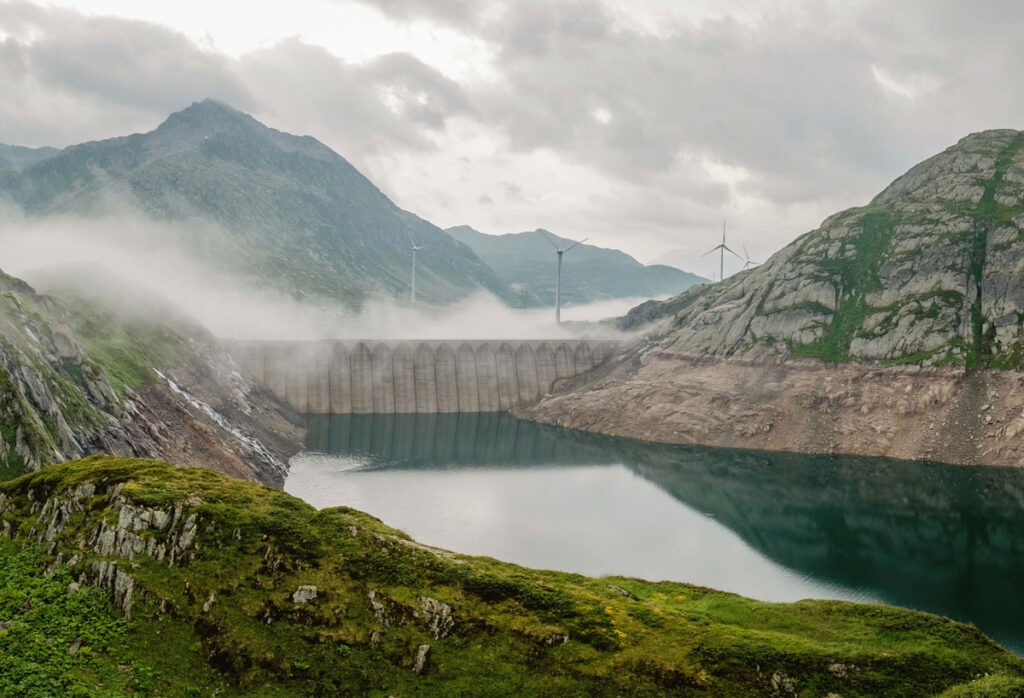
If we look at the energy consumption of properties, we can see that the world is divided into two parts
While the majority of electricity comes from the large grid operators, most heating systems are installed individually in properties. Both models have their advantages and disadvantages.
When electricity is purchased via the grid, properties benefit from the integrated infrastructure of the electricity providers and their large generation centres (hydroelectric power plants, nuclear power plants, solar and wind power plants, etc.). However, long-distance grid transport leads to a loss of electricity capacity, which reduces the efficiency of the model. On the other hand, there is the model with heating in your own basement. The distances to the end consumer are short and efficient, and you also benefit from a certain degree of self-sufficiency. However, the individual infrastructure costs are high, as each building must be equipped with its own heating centre and distribution system. To summarise the situation, there is too much individualism when it comes to heating and too little when it comes to electricity.
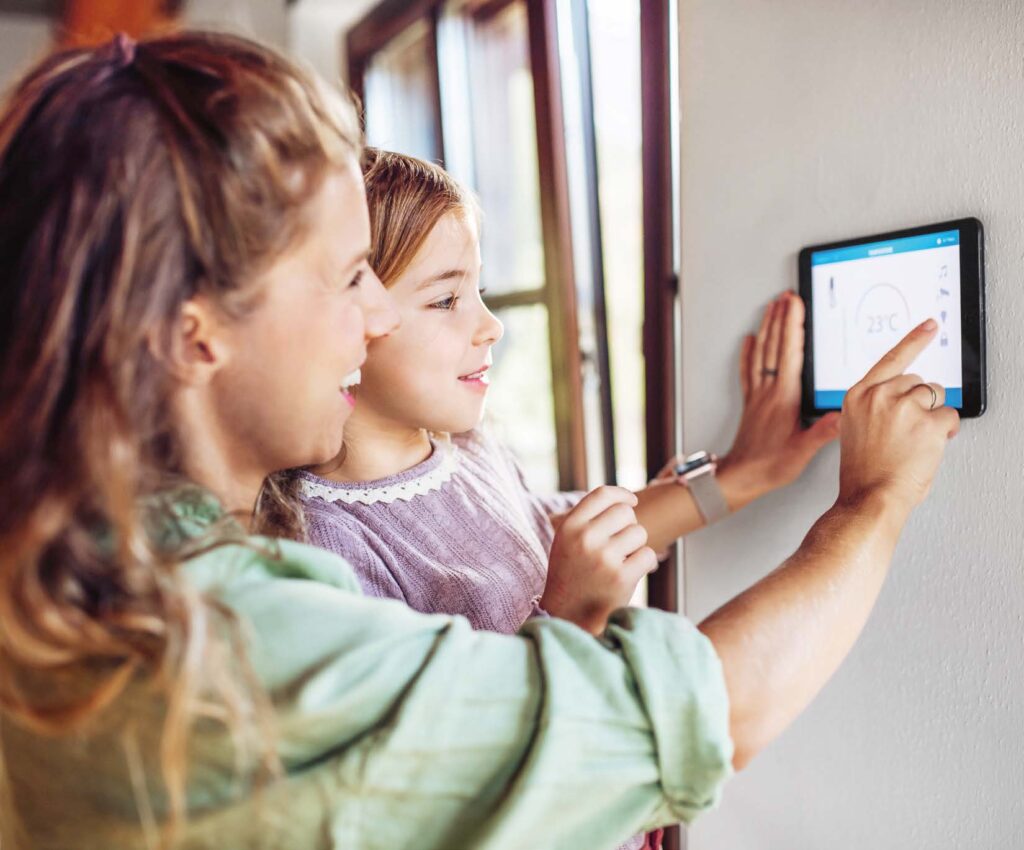
In the long term, the energy procurement of the future aims to better harmonise the advantages and disadvantages of these two models. Among other things, this means more individually generated electricity via photovoltaic systems and more heating energy in a heating network with several properties or across entire neighbourhoods. We are already technologically advanced in many areas, but bold decisions still need to be made in terms of development and the legal framework.
Lakes, rivers and soil as new «energy centres»
The two biggest technical challenges in switching to sustainable heating and electricity energy are the costs per unit of energy and the dark doldrums. For industry and households, it is economically relevant how much a purchased unit of energy costs. Although renewable energies such as wind and solar have become much «cheaper» in recent years, a unit of energy from these sources still costs more on average per year than a unit of energy from a «traditional» source.
Then there are the even more important dark lulls. This refers to the difference between the energy required and the energy produced. Where demand exceeds supply, this is referred to as a dark doldrums. Solar and wind power plants in particular naturally experience strong fluctuations in energy production. At the same time, however, industry and society need a permanently reliable source of energy, especially when there are peaks in demand - for example at midday or in the evening.
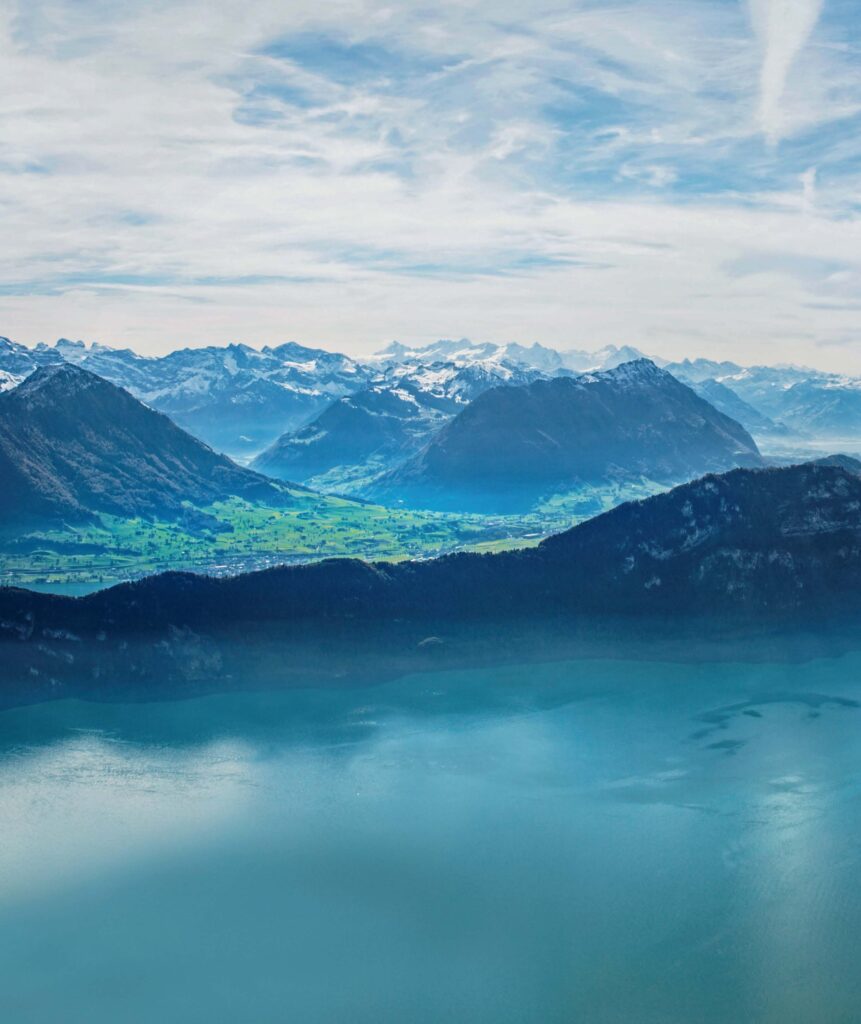
In our view, there is great potential for heating in the lakes, of which Switzerland is known to have many. For cities such as Lucerne, Zurich, Geneva and Lausanne, the respective lakes represent the largest heat reservoir of all. When extracting energy from lake water, the water, which is around 4 to 10 degrees Celsius all year round, is pumped from a depth of around 40 metres and transported to a heating centre. There, a coolant absorbs the temperature of the lake water and the water is compressed by a compressor, which generates heat. This heat is removed via a heat exchanger and can then be transported to the end user - the system is very similar to the heat pump.
In addition to the very low CO₂ energy generation, the system is also highly efficient. With today's technologies, the energy equivalent of 1 litre of heating oil can be generated from 4 m³ of lake water. This system can be scaled up so that entire neighbourhoods can be connected to district heating with a moderate investment. Rivers can also be used to generate heat, depending on their size and water level.
The situation is somewhat more difficult for electricity, as its production primarily requires flowing waters. These will soon be exhausted for electricity production in Switzerland, and the corresponding plants have largely been built. However, the latest developments in geothermal energy (i.e. geothermal energy stored in the earth's crust) are encouraging, even if the technology still has some way to go before it is ready for the market. Nevertheless, Fervo Energy, a start-up from Texas (USA), has recently succeeded in producing geothermal energy over a longer period of time without triggering seismic activity. The latter in particular was one of the biggest challenges in the past, as geothermal drilling often led to tremors. With the new technology, water can be pumped underground practically anywhere via fine boreholes. There it heats up naturally to 200 degrees and is tapped by an intake system above. Above ground, it is then converted into heat and electricity. As underground heat is practically the same all over the world, this form of energy supply is suitable for all geographical areas.
Networking properties
From an energy perspective, the properties of the future should be linked together. This applies to both the new-build site and the half-timbered houses in the old town quarter. If several properties share the same infrastructure, this massively reduces costs and leads to significantly lower resource consumption. In addition to the heating network, the focus is also on joining together to form local electricity networks, for example. Here, some houses could make electricity from their photovoltaic systems available to the surrounding neighbouring houses. This would mean that not all houses would have to make individual investments in their own electricity production. If the electricity supply were regulated even more dynamically, this would further increase efficiency.
Another factor could be battery storage. At the moment, the costs and benefits of storage media do not yet add up. However, the manufacturing costs are falling, partly due to advances in car battery technology. The inexpensive storage of electricity could even out dark doldrums. Energy security would be maintained and at a predictable price. Theoretically, electric vehicles could also be used for battery storage. Like their combustion engine cousins, electric vehicles spend most of their time standing around. During this time, they could transfer stored vehicle energy to the building services or store it dynamically using surplus energy from the photovoltaic system. The technology is not yet fully developed, but efforts are being made in this direction.
Expert opinion
«The future of energy-efficient properties lies in the networking of building infrastructure, in which heat and electricity are used together and produced locally, for example through photovoltaic systems, heating networks and geothermal energy; investments in storage media and flexible energy distribution could ensure security of supply even during dark doldrums.»
Moritz Falck
Group Executive, Owner
The Falck Group AG

Into the energy future with intelligent properties - an outlook
Technologically, we can already realise a great deal in the heating sector in order to generate heat sustainably and cost-effectively. However, we need the necessary infrastructure investments for this. In the electricity sector, we can look forward with confidence to the development of storage media that could even out the dark doldrums in wind and solar power. Geothermal energy also promises unimagined opportunities. In order for us to be able to utilise heat and electricity from these sources in the best possible way, our properties need to become more intelligent and networked. This will enable us to lead properties into the future in terms of energy.
Subscribe now for free
Subscribe now to the printed edition of our magazine IMMO folio.